Why Oman Belongs at the Top of Your Travel List
Geplaatst op 16-10-2026
Categorie: Reizen en recreatie
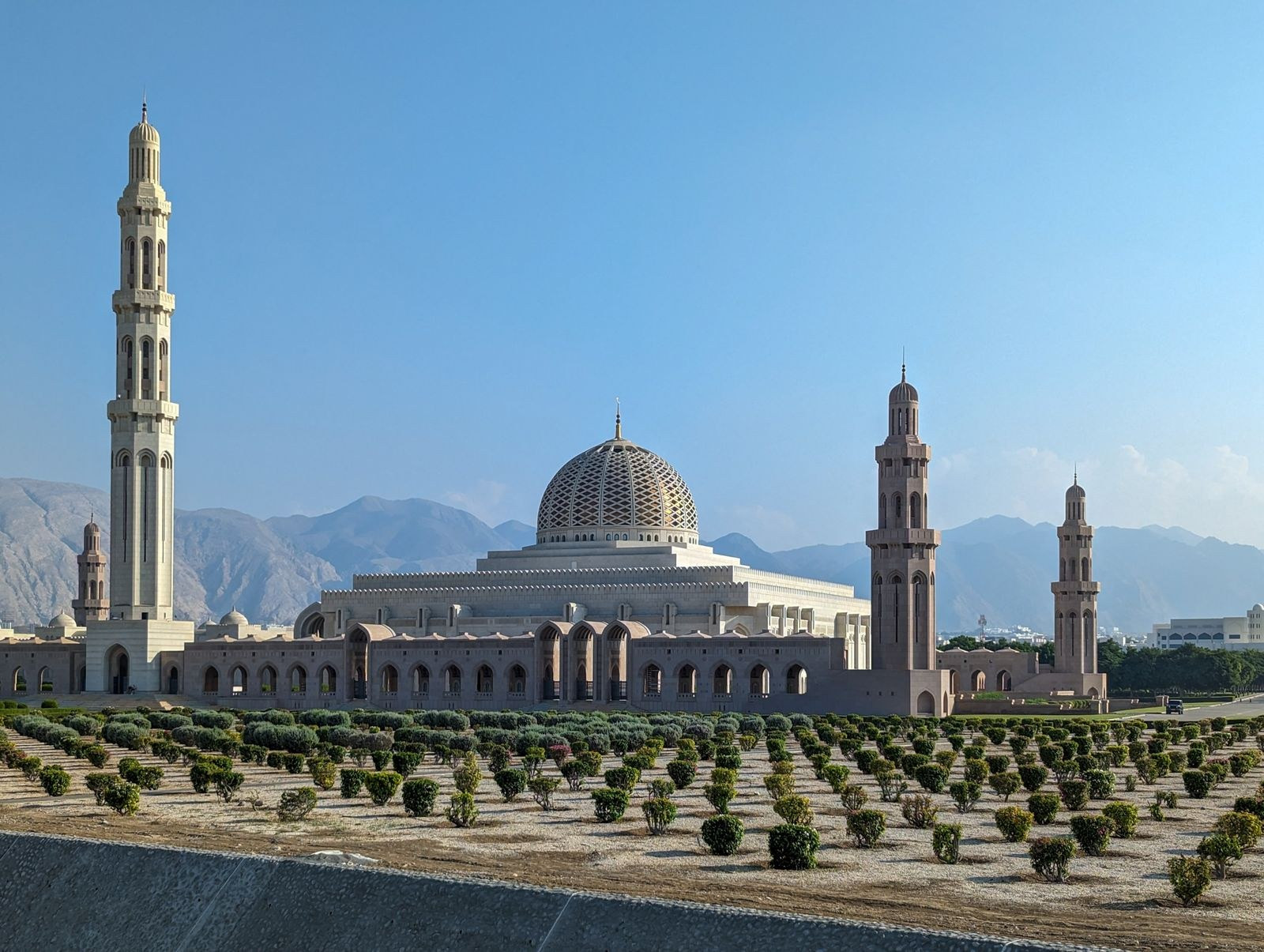
Most people who plan a trip to the Arabian Peninsula think of skyscrapers first. Oman is the opposite case. It is a country where the headline attractions are a canyon, a wadi with turquoise pools, a dune sea and a coastline that still has long stretches of empty sand. If you are deciding where to spend your next big holiday, here is why it deserves a serious look.
One country, several landscapes
The practical appeal of Oman is variety. Within a single trip you can stand in front of the white marble of the Sultan Qaboos Grand Mosque in Muscat, drive inland to the old oasis town of Nizwa, and sleep among the dunes of the Wahiba Sands the same week. Travel Oman for a week and you will probably find that the contrast between the places stays with you longer than any single sight.
Mountains add another layer. Jebel Shams is known for the Balcony Walk, a path along the edge of a deep canyon, and further north Jebel Akhdar has green terraces that look nothing like the desert below. In the south, Salalah has its own character, with the Wadi Darbat area and the old frankincense route.
The water part of the picture
It surprises many first-time visitors that Oman is also a place to swim. Wadi Shab and Wadi Tiwi have freshwater pools set between rock walls, and the Daymaniyat Islands offer snorkelling in clear water. Further along the east coast, Ras Al Jinz is a place for turtle watching, something that rarely fits into a typical desert-country itinerary.
Between the big sights there is a layer of smaller pleasures: the smell of frankincense in a souk, dates and coffee offered as a welcome, the silence of a plateau at dawn. None of these appear in a list of attractions, yet they are often what people describe when they talk about the trip afterwards.
Safety and the feel of the place
Oman is generally considered one of the safest countries in the Middle East. Crime is low and the people are welcoming, which makes a difference when you are travelling with children, travelling alone or simply not in the mood to be on guard. Self-driving is described by local specialists as straightforward, although many travellers prefer to hand the wheel to a driver on long desert days.
That relaxed atmosphere is hard to quantify, but it shows in small things: how easy it is to stop in a village, ask for directions and end up with a cup of coffee, or how a campfire evening in the desert with a Bedouin host feels hospitable rather than staged.
What a first visit can look like
Different trip lengths suit different appetites. A week is enough to cover the core: Muscat, the desert, Nizwa and the mountains of Jebel Shams. Ten days leaves room for the coast, including a swim in Wadi Shab and a day on the water near the Daymaniyat Islands. Two weeks adds Jebel Akhdar and Salalah, and with eighteen days you can include the east coast with turtle watching and the Sugar Dunes near Al Khaluf.
A useful rule is to avoid packing too much into the first visit. Oman rewards slower travel. Distances between regions are real, and a day that includes four hours on the road is a day with fewer hours for the place you came to see.
Planned for you, or planned by you
There are two broad ways to approach it. You can build everything yourself, comparing hotels, guides and routes. That works well if you enjoy research and have time. The alternative is to work with a specialist who builds a private route around your wishes. GoTravelOman.com, part of Origins Travel Group in Amsterdam, works this way: tours are private, tailored rather than packaged, and can be done with or without a guide or driver. Accommodation ranges from three to five star hotels to boutique stays and private desert camps.
The sensible questions to ask any provider are the same: is the tour private, what is included, who is on the ground in Oman, and what protection applies if something goes wrong. Booking protection varies from company to company, so it is worth reading the small print rather than assuming.
When to go
The most comfortable period for most visitors runs from October to April, when the weather suits desert, coast and mountain exploration alike. Outside that window the heat becomes a factor for daytime sightseeing, and Salalah follows its own seasonal rhythm.
The short version
Oman does not need a long list of reasons. It has landscapes that change within a few hours' drive, a reputation for safety, a culture of hospitality and enough water, sand and rock to keep different kinds of travellers happy. Choose the season, decide whether you want to plan yourself or let a specialist do it, and give the trip enough days to breathe. Those three decisions matter more than any attraction on the list.